|
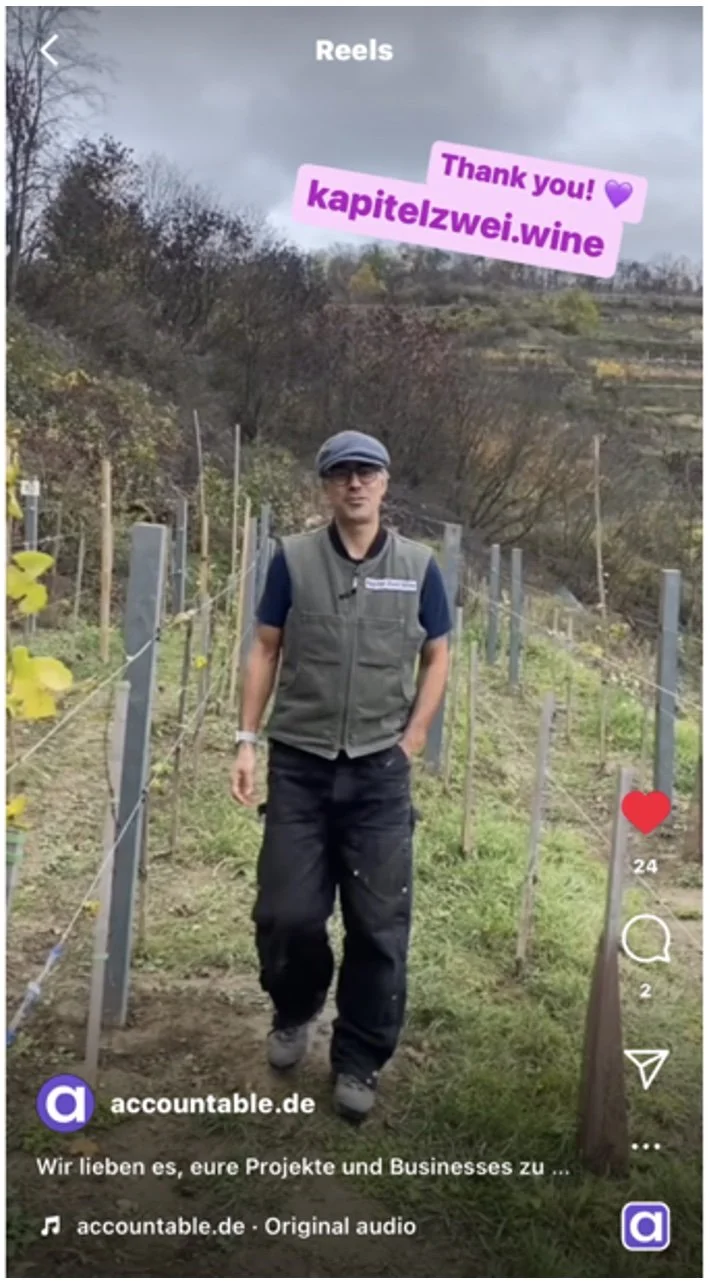
It’s been 244 days since the first hole was dug at Ried Kremsleithen, the plot name of the vineyard in Krems…so where are we now? The leaves have all fallen off and all of the sap has travelled down the Chenin, Sémillon and Roussane vines, as they go into dormancy for the winter. But there was a surprise along the way. 🫣 One of the Sémillon vines decided it couldn’t wait until 2024 and it produced about a dozen grapes. This is rather unusual as typically it takes three years, but I’m not complaining. It certainly points to the fact that the clay soil here can support Sémillon, which is a huge relief. This varietal tends to enjoy gravelly or clay-limestone soils, so we are not too far off the mark. It also gives me confidence that there will be enough sunlight to bear fruit. You are probably asking yourself, “Did he taste it?”. You bet! The grape was sweet and measured 20 degree Brix (°Bx), which is at the low end of the literal sweet spot when you decide to begin harvesting. Brix is the sugar content of a liquid. Most still wine grapes are harvested at between 21 and 25 °Bx. It´s an important metric to help winemakers determine how much alcohol will eventually be produced after fermentation. To calculate the alcohol you multiply the degree Brix by .55, which means my little Sémillon bunch would produce a wine with 11% alcohol — most still wines start at 12.5%, so if it was time to harvest it would be wise to just wait a little longer to reach a minimum 23 °Bx. I’ve decided to freeze the rest of the grape bunch and I am going to try and preserve them in an epoxy. I’ll share photos of this once it’s done assuming I don’t make a mess.
|